From space to biomedicine: Enabling biomarker data science in the cloud
The Space–Biomedicine Connection
Space missions generate enormous amounts of complex data from satellites, sensors, imaging systems, and scientific instruments.
Biomedicine now faces a similar challenge, especially in cancer research, where researchers work with:
- medical images
- genomic data
- clinical information
- biospecimen records
- AI-generated analysis results
The paper highlights that both space science and biomedical science depend on large observational datasets that must be captured, processed, stored, discovered, accessed, and analyzed.
This shared challenge creates a strong connection between the space industry and the biomedical industry.
Why the Cloud Is Important
Cloud platforms allow biomedical researchers to bring different types of data together in one secure, searchable, and scalable environment.
Instead of moving massive files between hospitals, laboratories, and research centers, scientists can store data centrally and run analysis workflows close to where the data lives.
Cloud computing supports:
- secure biomedical data sharing
- large-scale storage
- centralized data analysis
- AI and machine learning workflows
- reproducible research pipelines
- collaboration across institutions
LabCAS example
A major example in the article is LabCAS, the Laboratory Catalog and Archive Service.
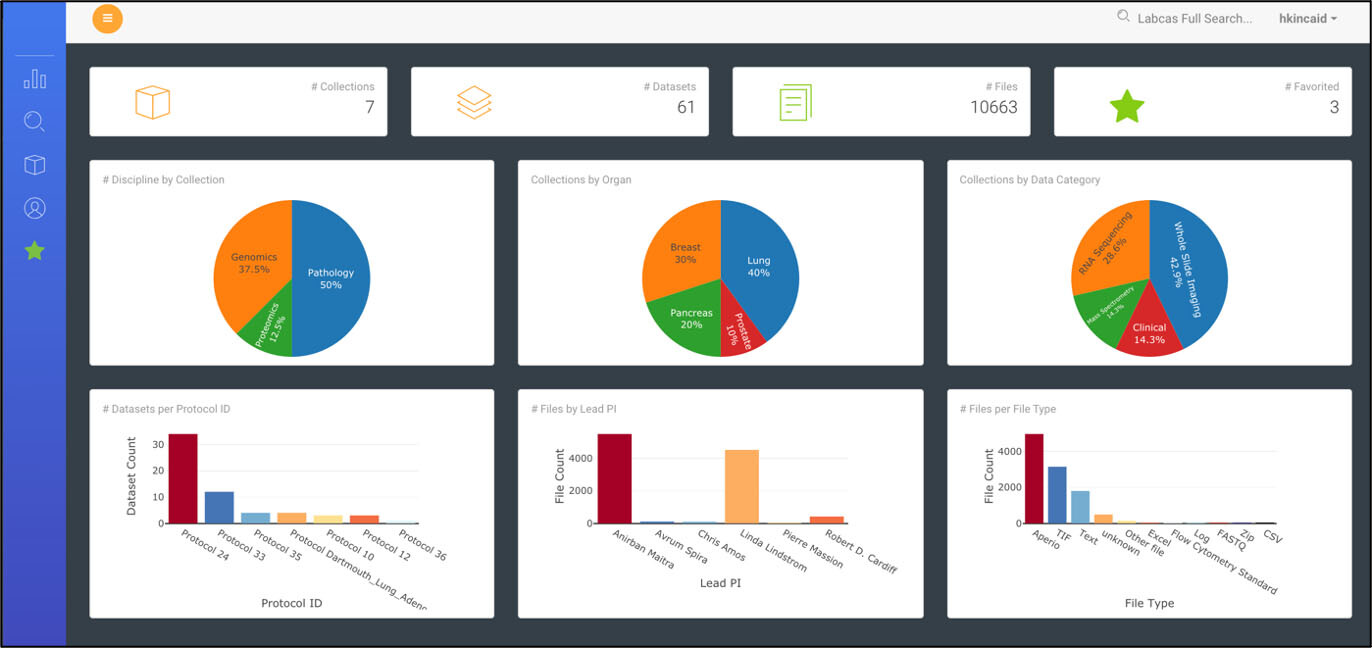
LabCAS is a cloud-based data commons developed to support cancer biomarker research [3]. It helps researchers capture, organize, search, share, and analyze biomedical data across multiple research centers.
The article states that this system includes approximately:
- 1,600 biomarkers
- 200 protocols
- 2,500 publications
- 100 terabytes of cancer research data and images
Relevance to Biomedical Research
The paper shows that cloud computing is much more than online storage. In biomedicine, the cloud can support the full research lifecycle: from data collection and annotation to analysis, sharing, publication, and AI-based discovery.
This is especially valuable in cancer biomarker research, where scientists need to combine various data sources to discover and validate biomarkers.
By using cloud infrastructure, researchers can work with larger datasets, apply machine learning methods, and collaborate more effectively across institutions.
Summary
The connection between the space industry and the biomedical industry shows how innovation can move across scientific fields.
Tools originally designed to manage satellite, planetary, and earth science data can now help improve cancer detection, biomarker discovery, and precision medicine.
References
[1] Crichton DJ, Cinquini L, Kincaid H, et al. From space to biomedicine: Enabling biomarker data science in the cloud. Cancer Biomark. 2022;33(4):479-488. doi:10.3233/CBM-210350
[3] NASA Jet Propulsion Laboratory.
“LabCAS: Laboratory Catalog and Archive Service.”
Available at: https://edrn-labcas.jpl.nasa.gov/